
#11 - The Upside-Down Water Cycle
On one of my flights home to California from an eastern state, I sat in front of a family with a 10-year-old son. The boy had the window seat but was asleep for the first few hours of the flight. When he awoke, we were west of the Rockies, and as he looked out the window he exclaimed “mom look, there aren’t any trees!” The mom went on to explain how they got lots of rain at their house, but out in the west they don’t get much rain. That conversation is what this newsletter is about — the water cycle that shapes every landscape on earth.
What if that system of recirculating water all over the planet is an upside-down system that didn’t exist before the worldwide flood? Our tagline here at Scargazers is: (Every scar has a story; the earth is scarred; what’s the story?) I believe one of those scars is the water cycle, and the inverted version of that cycle has continued to scar the earth ever since it was flipped upside-down at the time of the worldwide flood.
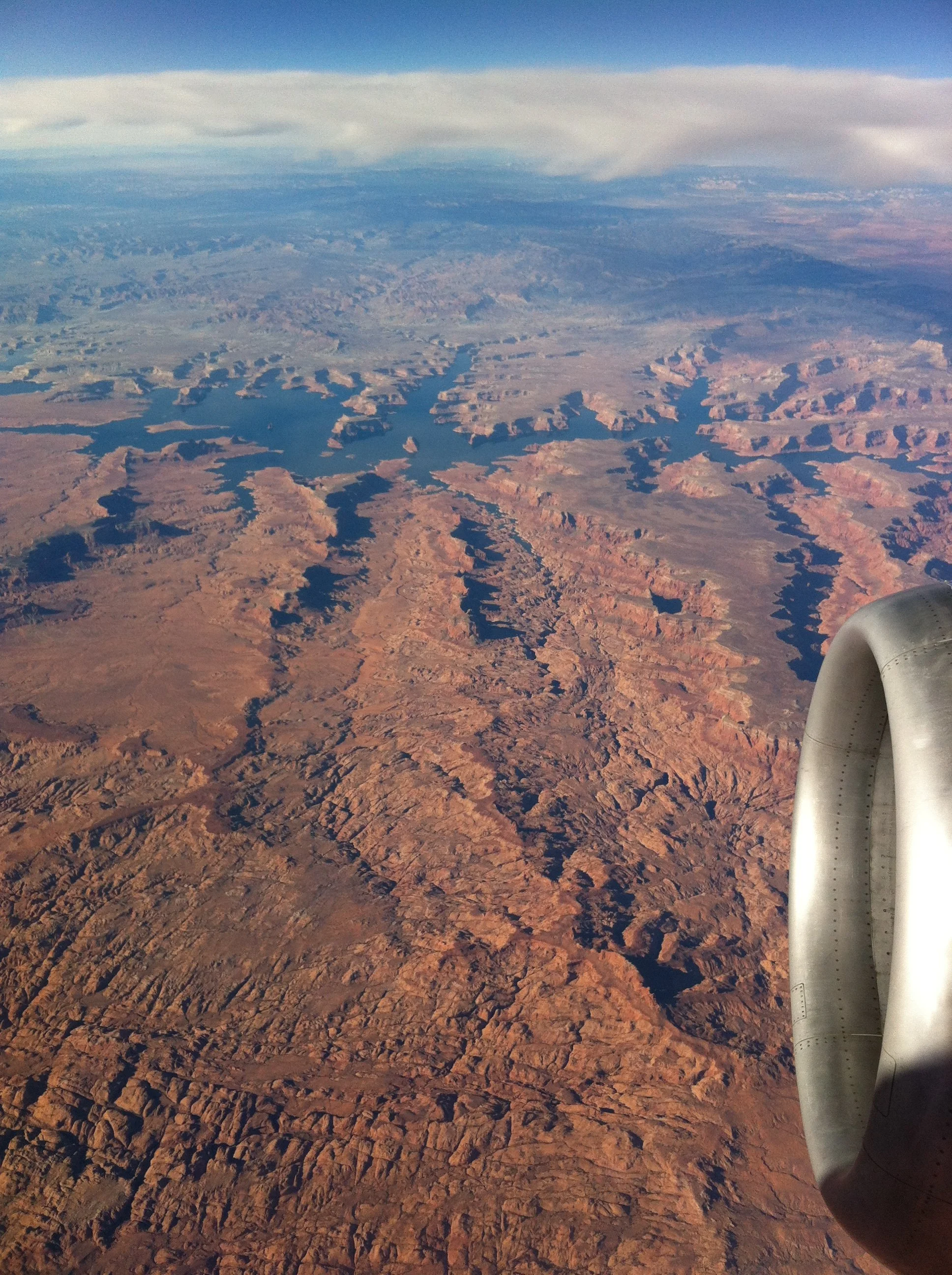
The Western United States - No Trees
Before the Flood
In the opening verses of Genesis, we see God establish the earth’s fundamental systems before creating any life. There was time, water, light, and dry land. In Genesis 1:6-7 we see God separating waters above and waters below, intentionally dividing the water into two distinct reservoirs. The waters below may describe the hydraulic structure in the original creation. Genesis 2:5-6 tells us there was no rain, but a stream would rise from the earth and water the whole surface of the ground. Was that the creation of the original water cycle? It certainly appears to use language that explains a land-based water cycle, and in the rest of chapter two as it describes four rivers in nourishing the Garden of Eden.
The Flood Changed Everything
In Genesis 7:11 we see the rupture of the two water systems that God had created during the creation week. Those foundational systems of nourishing life changed during the catastrophic year of the flood. In Genesis 8:2 we read that those key water systems were closed: “…the fountains of the deep and the floodgates of the sky were closed…” At that point we see a huge transition of the water cycle that occurred somewhat behind the scenes as we often focus on the enormous changes to the face of the earth.
A New Sign in the Sky
God initiates a new covenant in Genesis 9:12–14 where the rainbow was introduced as a new-covenant sign.
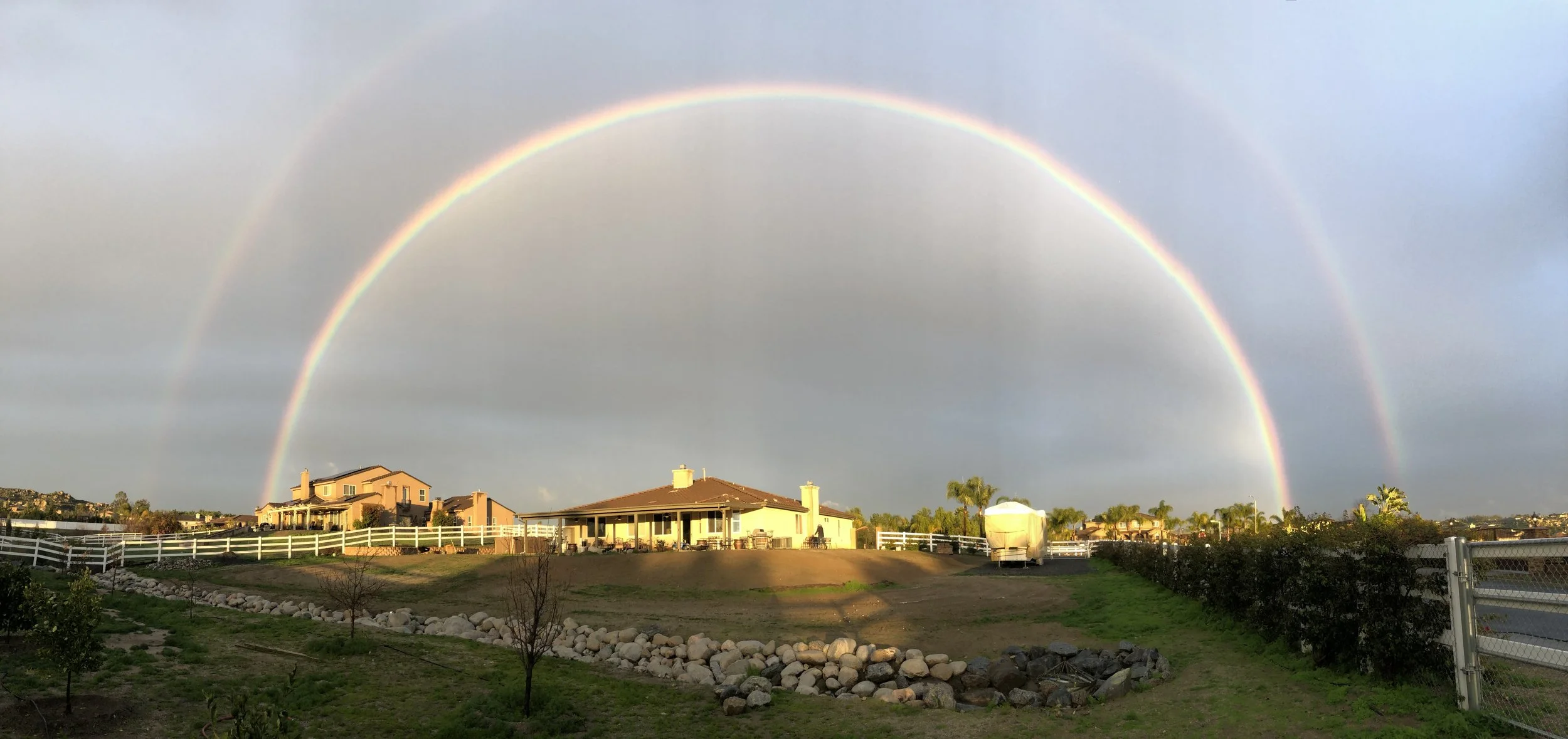
Our home when we lived in Riverside CA
"And God said, 'This is the sign of the covenant I am making...I have set my rainbow in the clouds, and it will be the sign of the covenant between Me and the earth whenever I bring clouds over the earth, and the rainbow appears in the clouds…”
The significance here is profound. A rainbow requires raindrops refracting sunlight, and it is physically impossible without rainfall. If rainbows are given as a new sign after the flood, this strongly implies the atmospheric conditions that produce them (rain falling from clouds) were themselves new or radically transformed. God wasn't pointing to something familiar; He was inaugurating something unprecedented — a whole new water cycle to nourish life.
After the Flood
In the Bible, King Solomon opens up the book of Ecclesiastes bemoaning the vanity of life and uses a few key cycles to highlight his point in chapter 1:5-7: “The sun rises, and the sun goes down, and hastens to the place where it rises. The wind blows to the south and goes around to the north; around and around goes the wind, and on its circuits the wind returns. All streams run to the sea, but the sea is not full; to the place where the streams flow, there they flow again” (ESV). That last cycle summarizes the current water cycle, the water flows into the sea, then evaporates and returns to the land so it can continue flowing into the sea. Solomon was writing centuries after the flood — the sky-based water cycle was all he knew.
What Would a Land-Based Water Cycle Actually Mean?
The implications touch every living thing. Think about what rain actually does to soil. It's violent in geological terms. Raindrops strike the surface, compact it, wash away topsoil, leach nutrients downward and into streams. The whole water cycle we live with today is a system of constant loss and replenishment. Farmers fight erosion. Aquifers get depleted. Rivers carry away the mineral wealth of continents into the sea.
Now reverse the direction. Water rising up through mineral-rich rock and soil delivers nutrients directly to root systems rather than washing them away. There's no impact erosion, no topsoil loss, no runoff. The entire land surface would function like one vast, self-irrigating garden. Every plant, everywhere on earth, would have steady, reliable moisture delivered from below — exactly the conditions described in Eden.
Creation scientists also point to what this would mean for the atmosphere.
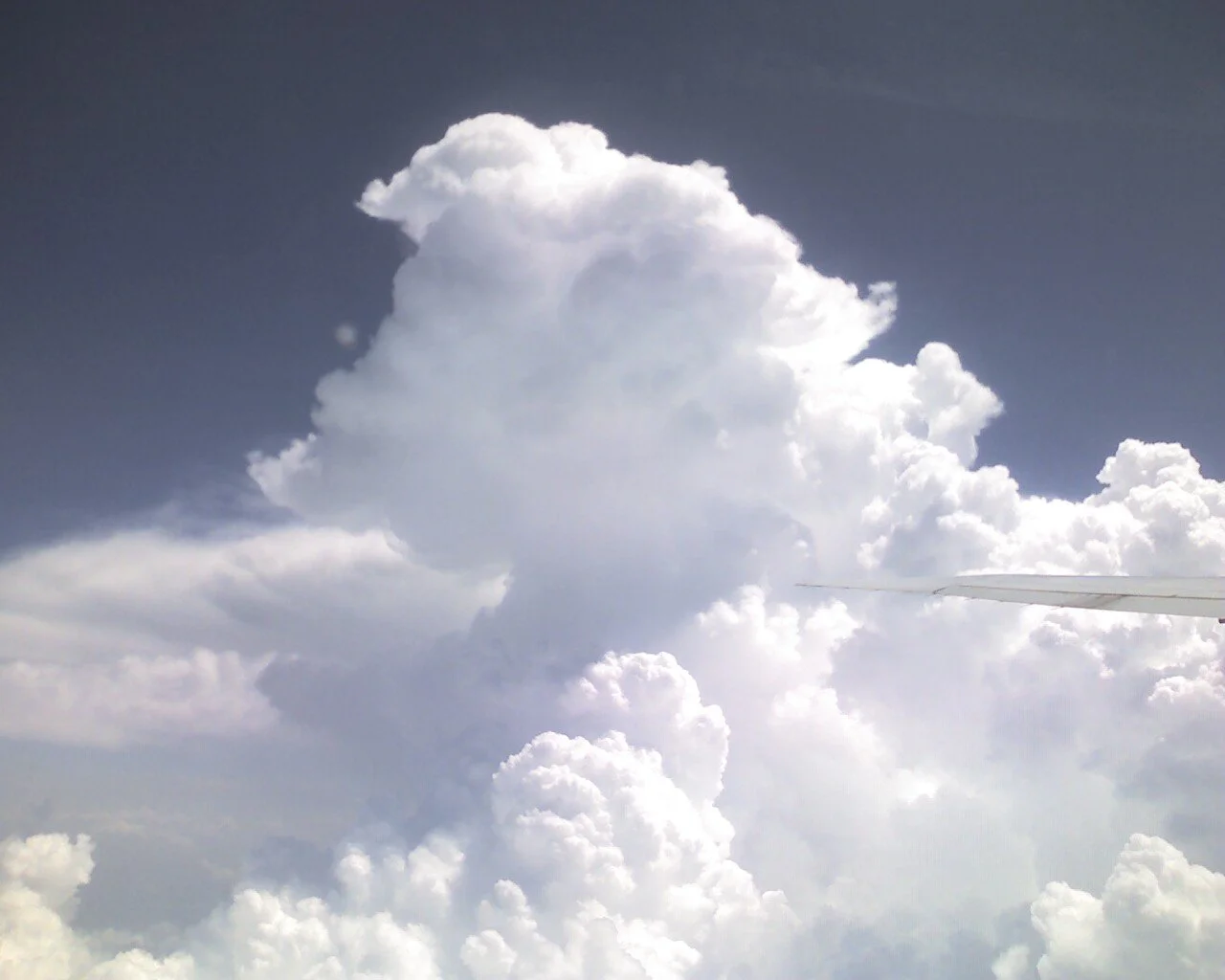
Storm Clouds from an airplane
Without the temperature differences that drive our current weather systems, the pre-flood world would likely have had a far more uniform, mild climate from pole to pole. No violent storms, no drought cycles, no seasonal extremes.
The Scarred Earth Shares a Story
Besides reading the Bible, the scarred earth can also help us better understand the pre-flood world. The earth is filled with sediments and millions (or billions) of dead things that lived in that pre-flood world and they all contribute to the story. Dinosaurs are just the beginning of the story, in the fossil record we find 80-foot sharks, 13-foot camels, and 8-foot beavers. The plant world matched with ferns that grew 40 feet tall. Coal beds are flood remnants, they’re biological material that was erased, buried, and compressed, just as we see in local floods today. The coal we’ve catalogued already exceeds all plant material on earth today. Scripture records that humans lived far longer, and the fossil evidence suggests animals did too. Something must have been very different in that pre-flood world, but what?
The Oxygen Connection
Here's where secular science unexpectedly walks right into the conversation.
Mainstream researchers studying ancient atmospheres have concluded that oxygen levels in the distant past were significantly higher than today's 21%, potentially as high as 30 to 35%. Their evidence comes from the fossil record itself: dragonflies with two-foot wingspans, millipedes over eight feet long, and other insects whose breathing systems physically cannot function at today's oxygen levels. The physics simply doesn't allow insects that large to get enough oxygen without a richer atmosphere.
But what produces oxygen? Plants do. Vast, global, uninterrupted vegetation, exactly what a land-based water cycle delivering constant, perfect irrigation would produce. And what does a richer oxygen atmosphere do to living things? As modern hyperbaric medicine is exploring exactly that, we have peer-reviewed studies that show higher-pressure oxygen environments reverse aging markers at the cellular level and stimulate tissue repair in ways that have genuinely surprised researchers.
The pre-flood patriarchs lived 800 to 900 years. We tend to read past that detail. But if the atmosphere was richer, the soil more nutrient dense, the water supply more consistent, and the climate more stable — longevity of that order starts to look less like a fairy tale and more like a consequence of conditions we've lost.
Why It Matters
We sometimes treat the flood as a catastrophic interruption. Yes, it was terrible, but then life resumed. What Genesis actually describes is a fundamental reorganization of the planet. The underground reservoirs were depleted and sealed. The atmosphere that had sustained it was gone. The world that emerged from the receding waters was a different earth, operating on different principles, requiring different strategies to survive — which is exactly why God immediately instructs Noah about agriculture, seasons, and the new rhythms of the world he's stepping into.
The shift from a land-based to a sky-based water cycle wasn't a footnote to the flood. It may have been one of its most consequential outcomes — reshaping soil chemistry, plant abundance, atmospheric oxygen, climate stability, and ultimately the length of human life itself.
The next time you feel rain on your face, you're experiencing a system that has only been running for roughly 4,500 years. The world before it was something we've never seen, and its traces are written in the geology, the fossil record, and the quiet details of Genesis 1 and 2 that most people read right past.
Until next time,
Greg and Sheila Bair